
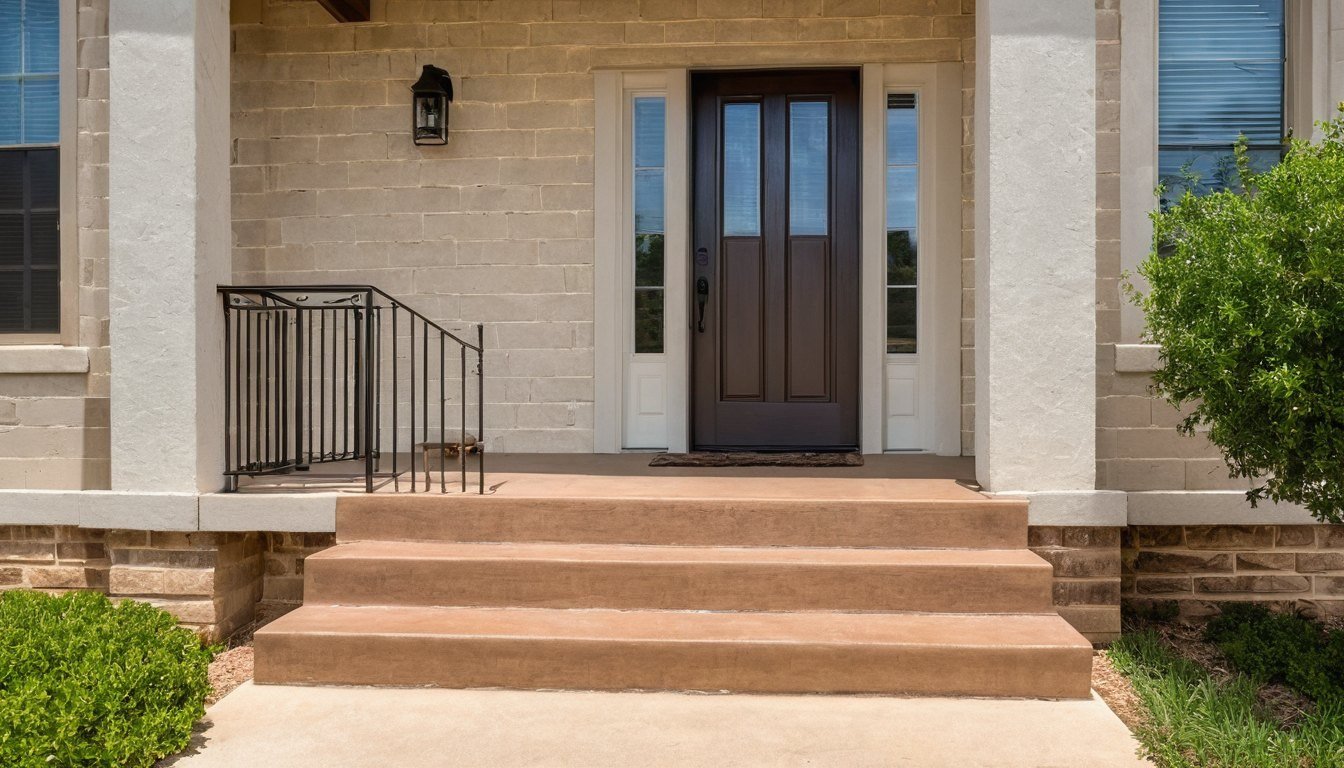
Steps are small, but they carry a big job. Every guest, every delivery and every grocery trip crosses them. A step that is too tall, too short or uneven can cause a fall. A step that settles away from the door leaves a gap that grows each year.
Waco Concrete builds concrete steps in Waco TX for front doors, back doors, patios and garden slopes. We are locally owned, we have been in business for 8 years and we give a free written estimate with a clear sketch.
Getting concrete steps right the first time
Good steps follow a simple rule. Every riser, the vertical part, should be the same height. Every tread, the part you stand on, should be the same depth. Even a small difference can make people trip. We measure from the door threshold to the ground and divide the height evenly.
Most steps use a riser between six and seven inches and a tread of about eleven inches. Handrails are important for steps with several risers. We can build the steps to fit a railing.
- Even risers and treads
- A landing big enough to open the door
- A broom finish and a rounded nose for grip
- A footing that will not settle
Why concrete steps settle in Waco
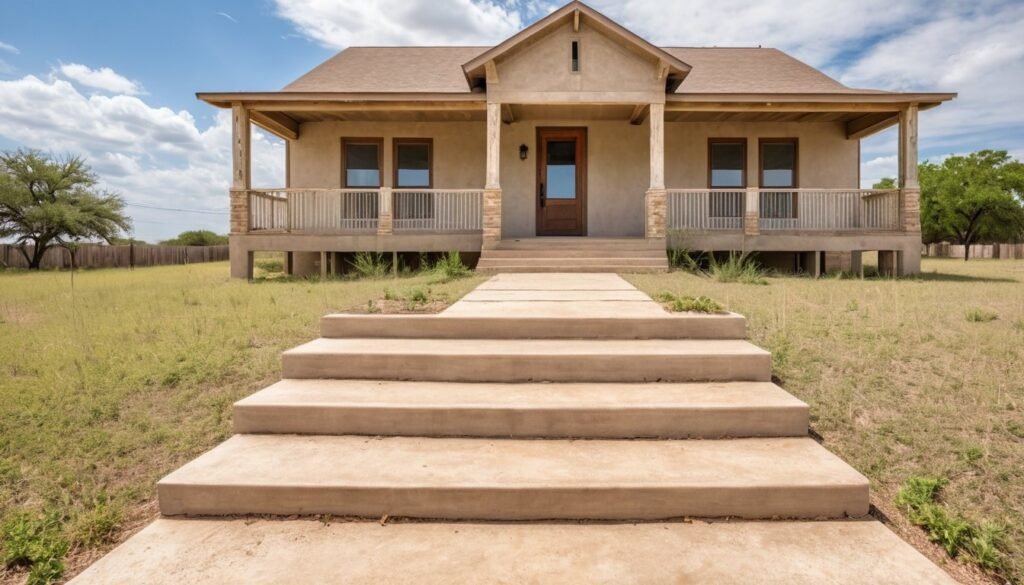
Many old steps pull away from the house. The reason is usually the ground. Soil beside a house is often loose fill. It washes out in a storm or shrinks in a dry summer, and the steps tilt. Clay can also push them up.
We dig down to firm soil, compact the base and add steel. For taller steps, we pour a footing. We also slope the landing slightly away from the door so rain runs off. See concrete leveling if you already have steps that have sunk.
Shapes, rails and finishes for concrete steps
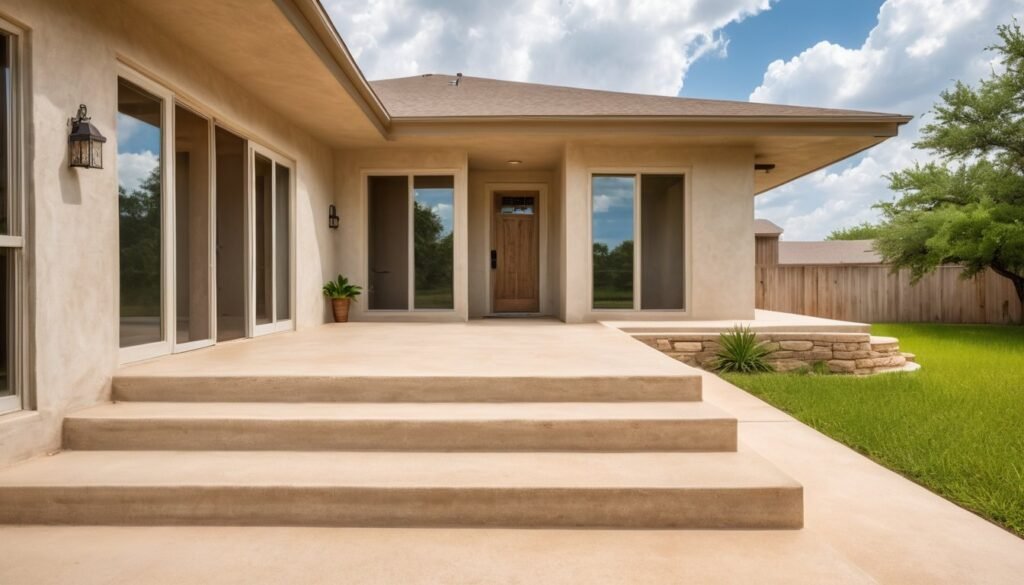
Steps can be straight, curved, wide or tucked beside a wall. A wide front step with a landing makes a welcoming entry. Brick or stone veneer, stamped patterns and color can match the house. See decorative concrete and stamped concrete.
We can also build a ramp next to steps for easier access. Tell us who will use the path, and we will plan the slope and the rails.
Concrete steps cost, timing and next steps
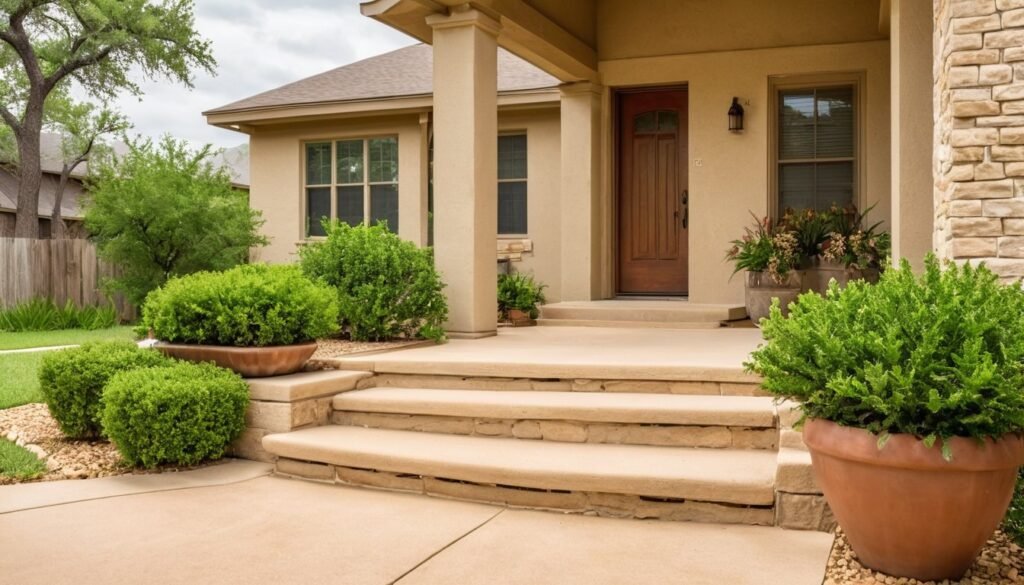
Price depends on the number of steps, the size of the landing, tear out and finish. A small set of steps takes about a day to form and pour, plus time to cure. We give you the plan and the price in writing.
Call us any day from 5 AM to 10 PM or use the contact page.
Concrete Steps questions answered
How tall should each step be?
A comfortable riser is between six and seven inches tall. Many building codes allow up to seven and three quarters inches. A step taller than that feels steep, and a step shorter than five inches is easy to trip on. What matters most is that every riser in the set is the same height, within about a quarter inch.
We start by measuring from the door threshold to the ground, then divide that height into equal steps. The tread, the part you stand on, should be at least ten or eleven inches deep. Local code rules may apply to your steps, so we check them before the pour.
If you are replacing old steps, we can match what works and fix what does not.
Share your door height and any code questions when you call, and we will plan the right steps in Waco TX before we visit.
Why are my concrete steps pulling away from the house?
Steps pull away when the ground under them moves. Soil next to a house is often loose fill from when the house was built. Rain can wash it out, and a dry summer can shrink it. Clay soil in Waco also swells and shrinks with the seasons. Over time, the steps tilt or sink and leave a gap along the wall.
Water is the main cause, so we look at your gutters and downspouts first. A small gap can sometimes be fixed with concrete leveling and a sealed joint. A large gap or a broken step may need replacement. We look at the steps, explain what we see and give you a written price for each choice.
A little water control goes a long way, and steps stay put when gutters and downspouts do their job. A quick photo of the gap and a note about when it started help us tell if the soil is still moving or has already settled.
Do concrete steps need a handrail?
In most places, steps with more than three or four risers need a handrail, and some codes require one even with fewer. A rail is also just a good idea. It helps children, older adults and anyone carrying something heavy. In wet weather, a rail adds a lot of safety.
We can build the steps to fit a railing, with a place for the posts set into the concrete or bolted on. We also leave extra width when needed. Tell us about the people who use the steps, and we will help you plan. We check any city or HOA rules before the pour, so the steps pass inspection and fit the home.
Handrail posts are easiest to set while the concrete steps are poured, so tell us early if you want a rail. We can also add a simple grab rail or a short wall beside the steps, and we plan the base for it during the pour.
Can you repair broken or crumbling concrete steps?
Often, yes. A chipped edge or a cracked corner can be repaired with a bonded patch. Surface flaking can sometimes be fixed with a thin overlay. A sunken set of steps can be lifted. The key is that the steps must be solid underneath and not shifting.
If the steps are broken in many places, have a bad footing or are too steep to be safe, replacement is the better choice. We look at the steps and tell you plainly what we think. See concrete repair for repair options. A new set of steps often costs less than people expect, and it can improve the safety and look of your entry.
Repair is often smart, but a safe set of concrete steps matters most, so we tell you honestly when it is time to start over. A sample of the repair patch helps you see how well the color matches before we finish the whole step, and we are glad to show you.
What finish is safest for concrete steps?
A broom finish is the safest and most popular. Fine lines pulled across the wet concrete give grip, even in the rain. A rounded edge on the nose of each step also helps. A smooth, hard trowel finish looks nice but can be slick, so we do not recommend it for steps outside.
If you want color or a pattern, we can add it with grip in mind. A coarse sealer or a non slip additive helps on stamped or stained steps. Painted yellow edges can help at night. Tell us how the steps are used, and we will pick a finish that looks good and keeps feet steady. Safety always comes first.
Good grip is part of every set of concrete steps we pour, with a rounded nose and a broom texture on each tread. If the steps are slick in the rain, tell us. A coarse broom pass or a grip additive in the sealer can help a lot.
How long before I can use new concrete steps?
You can usually walk on new steps after a day or two. We keep the surface protected until then with barriers or tape. Light use is fine after that. Heavy loads, like a moving dolly or a loaded cart, should wait about a week.
The concrete reaches full strength in about 28 days. During that time, avoid dragging furniture or tools across the steps. We tell you the exact days for each use, and we help you plan how to get in and out of the house while the steps cure. A temporary ramp or a different door can work for a few days.
A short wait is worth it. Fresh concrete steps are strongest when you let them cure and use them gently at first. If a child or an older adult uses the steps often, say so, and we will plan a gentler rise and a wider landing for comfort.
Ready for a free estimate? Call (254) 233-1766 any day from 5 AM to 10 PM, or use the estimate form. Waco Concrete is locally owned and gives clear written estimates for slabs, patios and driveways.